Opportunity Found: Israelis Purchasing Properties in Greece
The decline in real estate prices in Greece is generating interest among many Israelis seeking to build vacation homes or hotels, purchase investment apartments in Athens and Thessaloniki—and even acquire entire islands. What attracts investors to invest specifically there, how to proceed correctly, what are the risks, and what does the economic reality in the country look like?
Israelis are interested in a wide variety of properties, and potential Israeli buyers can be divided into three categories: those interested in properties for building a villa or vacation home near the sea for summer or holidays; those interested in purchasing properties for investment purposes to obtain good and stable returns; and those interested in acquiring a business in Greece such as hotels—and are willing to relocate their lives there.
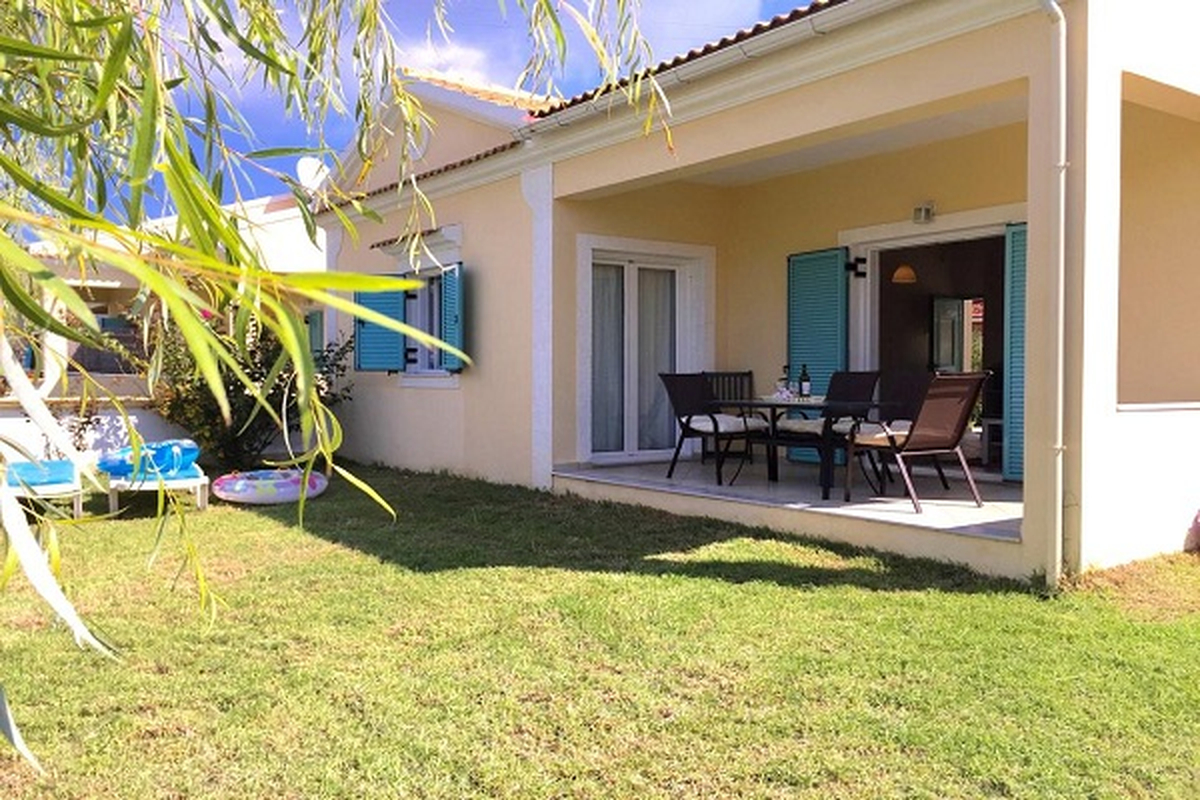
These are prices dramatically different from those in the local real estate market. In Mykonos, one of the most expensive islands in Greece, one can purchase a 2,320 m² plot including a 176 m² villa for one million euros. On the island of Crete, also considered expensive, one can purchase a villa of 79–83 m² for 139,000 euros. In the Pelion peninsula, a 270 m² villa is offered for sale at 495,000 euros. On the less expensive islands, villas can be found for approximately 250,000–350,000 euros for a dunam and a half, including a private beach—with prices rising accordingly as one gets closer to the sea.
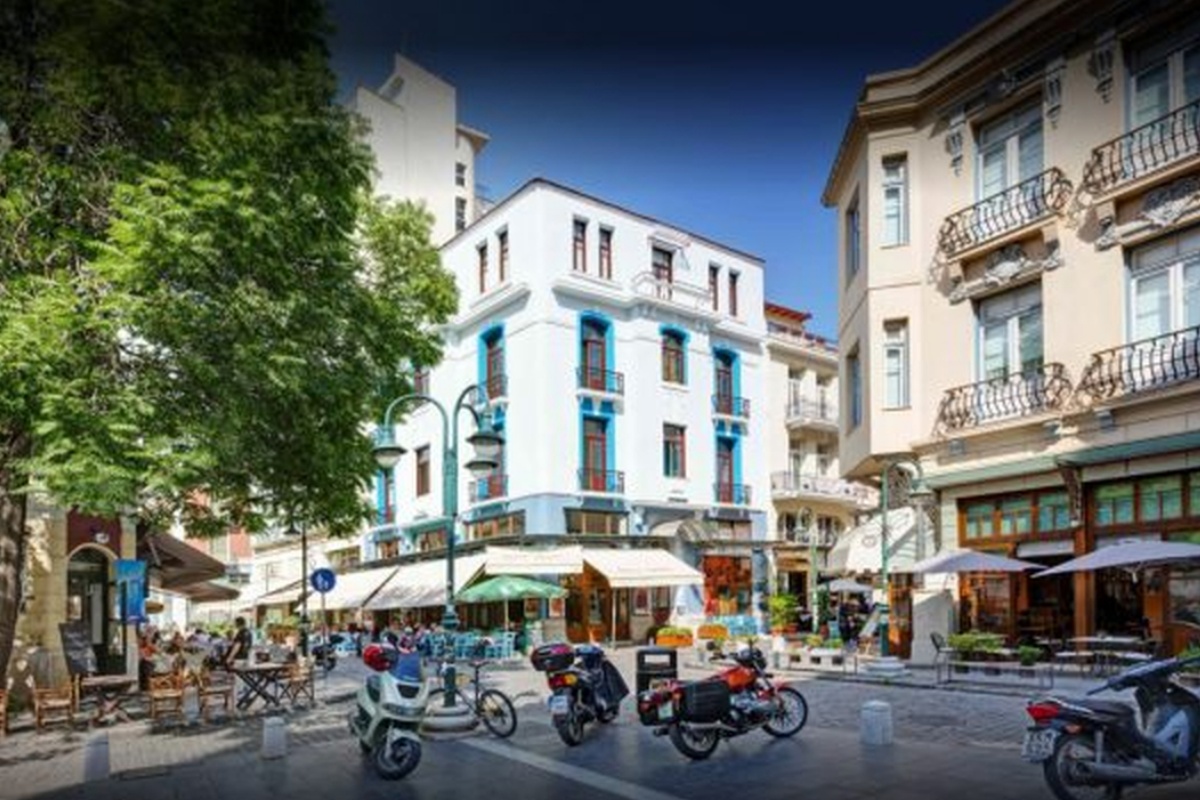
In the city of Athens, one can find an 80 m² apartment for 55,000 euros. A 98 m² apartment will cost approximately 60,000 euros in the city. In Thessaloniki, prices are higher—there one can find a 65 m² apartment for 70,000 euros.
Dramatic Decline in Prices
Until recently, Greece troubled investors worldwide due to the country’s enormous debt. The major concern was the nightmare scenario—Greece’s exit from the Eurozone, a move that could have created a domino effect and entangled all Eurozone countries, especially the peripheral nations (Italy, Spain, and Portugal).
The nightmare scenario was averted once again thanks to massive assistance from Germany and the International Monetary Fund. The austerity program to which Greece is committed; the elections in Greece that ensure the continuation of the austerity program; and compliance with the obligations imposed on the country as a condition for receiving assistance—all these currently alleviate investors’ concerns and make room for a renewed examination of Greece as an attractive destination for real estate investment.
Rodoula Michailidou, a Greek attorney residing in Thessaloniki who specializes in guiding Israelis through real estate transactions in Greece, identifies an increase in demand. Just before the conversation with ynet, Michailidou managed to close another deal with Israelis purchasing a hotel in Greece.
“Demand from Israelis has existed since 2009 and many transactions have been completed,” she says. “Greece has always been a good destination for investments, but until recently real estate prices were very high. After the financial crisis that struck the country, there was a dramatic decline in real estate prices, which explains the growing demand. There are excellent opportunities here for both commercial properties and residential units. Israelis are showing interest in all types of properties.”
Michailidou adds that “the atmosphere in Greece is very friendly, warm, and welcoming. There are also many Jewish institutions, especially in Athens and Thessaloniki, and beyond that, Greece is a member of the European Union and NATO. The atmosphere is good—but the strongest explanation for the demand is the excellent opportunities that exist in the country, and the fact that Greece strongly encourages foreign investment.”
From the Beach of Mykonos to Thessaloniki
Michailidou emphasizes that interest exists in all regions of Greece. “Each requirement focuses on a different area—there are regions more suitable for investment and other regions more suitable for vacation homes,” she explains. “In general, demand for the islands is very prominent—for example, Mykonos, Paros, Antiparos, Lefkada, and others. Thessaloniki and Athens are more suitable for investment in commercial properties, rental apartments, or purchasing businesses such as hotels, supermarkets, shops, and offices.”
Regarding possible risks in purchasing properties in Greece, Michailidou notes that attorney guidance is essential in such a purchase process. “It is mandatory to inspect the properties with attorney guidance to ensure there are no legal obstacles. An attorney must handle all bureaucratic and paperwork matters involved in the purchase. With proper attorney guidance, I am convinced there are no real risks,” she adds.
From the Israeli perspective, Greece has never been a particularly popular destination for foreign real estate investments, and certainly the demand from Israelis for real estate in Greece cannot be compared to the demand for real estate in the United States. Investments in Greek properties are still not as strong as in other regions of the world, but it appears that alongside the tourism boom, Israeli investors are also beginning to show some interest.
Instead of a Second Home in Israel
Idan Sarusi, manager of GRE (GREECE REAL ESTATE), a company specializing in brokerage and consulting in the Greek real estate sector, resides in the island nation himself. He emphasizes that in recent months there has been an increase of thousands of percent in demand for Greek properties from Israelis; and in the past month alone, the company under his management received approximately 500 inquiries from Israelis interested in examining the purchase or investment in real estate there.
“These include apartments for purchase, villas, hotels, commercial properties, and vacation homes,” he continues. “There are quite a few Israelis who understand that it is preferable for them to invest in Greece instead of buying a second home in Israel; and Greece, for its part, encourages investments by foreign residents.” Sarusi believes that the convenience factor plays a significant role in choosing Greece specifically as a destination for property acquisition, and notes that Greece’s geographical proximity to Israel creates attractiveness and allows thorough inspection of the purchased property.
“The trip to Greece is almost equivalent to a trip to Eilat, and in addition there is cultural proximity,” he says. “The attitude toward Israelis is warm and welcoming, and the anti-Semitism that characterizes European countries these days is less felt here and is not specifically directed at Jews. Naturally, in times of economic crisis there is suspicion toward foreigners—but we feel the opposite is true: we received praise, purchased a hotel and received warm treatment from the locals, there is an atmosphere of cooperation.”
Beyond convenience, the primary factor encouraging Israelis to venture into Greece is the attractive price of properties compared to apartments in Israel. “Land prices are very cheap in Greece, and construction costs are also relatively low compared to Israel,” he says. “While in Israel one purchases an apartment at 25,000 shekels per m², in Greece one can find properties at 3,000–4,000 shekels per m².”
Targeting Pleasure
Attorney Assaf Hoffman from the law firm Doron Tikotzky Sadeh Kan, an expert in international taxation who guides Israelis through the process of purchasing and investing in foreign real estate, also identifies growing interest from Israelis in properties in Greece specifically. According to Hoffman, most of the Israeli buyers he guides in Greek transactions are wealthy individuals targeting pleasure rather than investment activity.
“Most of them purchase relatively inexpensive land on the islands for the purpose of building a small villa and summer cottage,” he notes. “These are not people relocating their life center to Greece but rather purchasing land near the sea for vacation homes during the summer period. People entering such a purchase are not targeting a major investment and exit, but are doing so more for vacation and enjoyment purposes, so there are also fewer concerns about the return on investment.”

Only a Greek Attorney
Attorney Gila Lieber Golan from the law firm Belter Gut Aloni Co., who serves as chairperson of the Israel-Greece Chamber of Commerce, is intimately and thoroughly familiar with the economic reality in Greece. In a conversation with ynet, she agrees that Greek real estate represents an opportunity, and this is the sector with the fewest risks—provided the steps are carefully examined. “It is possible if done correctly,” she clarifies. “One cannot come to a foreign country and operate independently. The first rule for economic activity in Greece is to operate with the assistance of a reliable and honest local attorney.”
According to her, “In Greece there is, at times, this pitfall of improper conduct that one must be wary of. There is heavy and cumbersome bureaucracy, one needs skill and knowledge in reading property ownership. Only with a local attorney can one operate correctly—there are large and heavy books that one must know how to read and not everyone knows how. If done correctly, ultimately the process is not very complicated, it is not impossible but one must work with a fine filter.”
Attorney Lieber Golan also identifies an upward trend in Israeli interest in Greek real estate properties. She explains the viability in the price decline and the fact that the Greeks decided to ease the bureaucracy somewhat in the real estate sector, and additionally notes that this is the sector that was not affected by tax increases from the government. “Greece has something to offer and there is a good option in real estate properties,” she notes. “The Greeks were not quick to lower prices—but reality forced them to reduce them by 15–20%.”
Taking a broader look at Greece, Lieber Golan provides a glimpse into the true economic situation in the country. She admits that currently the economic reality there is not good, and although Greece has somewhat dropped from the headlines, there is no calm. “There are quite a few projects that have stalled because there is no money, no ability to pay salaries, and companies have entered very severe financial distress,” she describes.
According to her, “One cannot rely on banks for projects because no bank is lending. Citizens still have the restriction of cash withdrawals of up to 420 euros per week; and in addition, the Greeks are suffering from a VAT increase to a level of 23%. The unemployment rate in the country is also very burdensome and soars above 25%—the truth is there is a strong atmosphere of despair.”
Lieber Golan even reveals the difficulties she faces in her activity as chairperson of the Israel-Greece Chamber of Commerce. “Recently I tried to initiate conferences and bring experts from Greece to present the business potential. The responses from the Israeli entities I approach are that this is not the time—’wait.’ People are afraid of doing business in Greece. To invest in Greece one must come with money from home because there is no lending bank. We as the Chamber of Commerce cannot change this reality,” she reveals.
Nevertheless, she emphasizes that Greece is “not yet dead” and there are people who want to do business. These days, Lieber Golan is reopening the gates of the commercial chamber and reaching out to recruit new members with business ties to Greece. “One must remember that tourism is a stronghold and no one will take away Greece’s beauty. There is business potential in the country, but currently one must wait for the governmental system to stabilize—the reality right now is not good,” she argues.
Properties at Extremes
But if you thought Israelis are satisfied with properties alone—you are mistaken. Recently, against the backdrop of its economic situation, the Greek government has also put quite a few islands up for sale to foreign investors. Among the Israelis enthusiastically watching the sharp decline in Greek property prices, there are also those aiming further to purchase an island in Greece. Wealthy Israelis are approaching Greek companies through attorneys and feeling their way toward executing a major deal of purchasing islands, with the intention of developing tourist attractions on the island or purchasing an island, waiting for property values to rise, and then selling at a higher price.
Island prices in Greece range between 7 million euros and 50 million euros. In a conversation with ynet, Sivan Zamir, who is involved in promoting and marketing tourism projects in Greece, says that there are Israeli purchasing groups showing interest in acquiring islands at prices ranging between 7–13 million euros. “I know quite a few such purchasing groups, but at the final stage we still do not see it happening,” he says.
According to him, “Four purchasing groups approached me through attorneys, and recently I received a report that the process dissolved due to bureaucracy and because the Israelis are pressing the Greeks very hard to lower the price. The Israelis are trying to drive prices to levels not acceptable to the Greeks and then the deal falls through. There are still two more purchasing groups conducting negotiations.”
Zamir, who forwarded the inquiries to Greek companies, notes that most of the islands Greece offers for sale have no infrastructure and the investment cost for their development reaches the price of the island and even more. In his assessment, interest in Greek properties from Israelis will increase, because Greece appears very inexpensive. “I suggest targeting islands that are semi-developed for tourism, that have an airport which in the future could become international (such as the island of Paros, which is being developed for international tourism).”
In addition, Zamir notes that there is a contingency plan in Greece to transfer tourist cruises to another port located south of Athens, which is expected to make the islands in the area more attractive and their real estate value is expected to rise. “Property values may double after airports are opened,” he concludes.